

What are you looking for?
You might be looking for...

Ús de la imatge, violència i salut mental
Amb Fátima Masoud i Hache Mau
Open session of the Santa Mònica collective learning and research program Situations (making): participatory art and thought.
Free activity limited to 56 people
Language: Catalan and Spanish
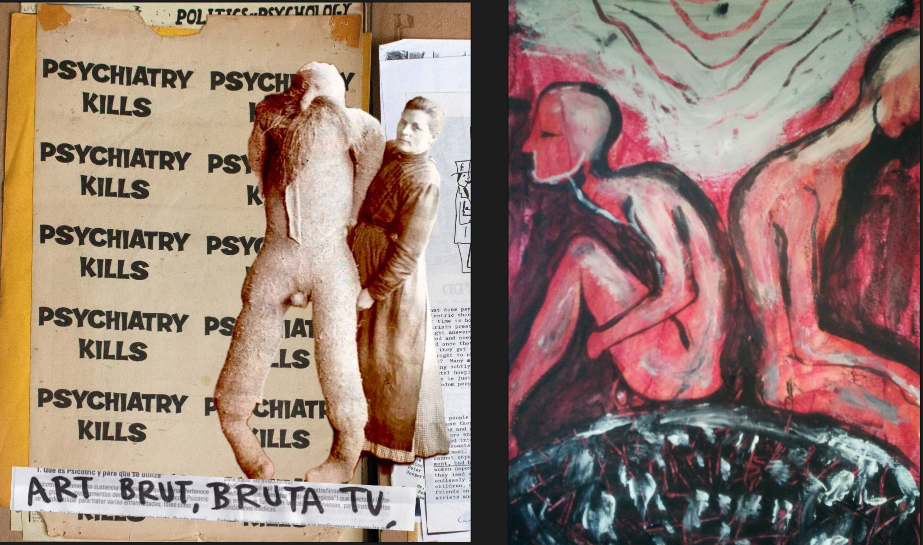
Fátima Masoud is going to talk about the relation between art and insanity. The project Art brut, bruta tu 100 mg seeks to question the logics through which we approach mental health and its relationship with the world of art. It reflects on Draft Art as yet another form of psychiatric violence, as well as on the dispossession and guardianship of psychiatrized people.
Meanwhile, Hache Mau proposes a situated dialogue on mental health, migration, and structural violence. We understand psychic distress not as an individual failure, but as a collective response to the colonial-capitalist order. We share practices of care and survival rooted in lived, community-based, and non-clinical forms of knowledge.
Public conference from the (crear) Situacions program with the participation of Fátima Masoud and Hache Mau.
Fátima Masoud is a researcher, artist, and mental health activist. She is a member of the mental health activist collective La Bajona Colectiva. She has written articles and given talks on psychiatrization and Mad Pride. She is the author of Art brut, bruta tu 100 mg (Edicions La Escocesa, 2024), a work on the guardianship and dispossession of psychiatrized people in the art world, and has participated in Cosmologies vulnerables (Catarata, 2025). She researches, writes, paints, and continues to survive the psychiatric system.
Hache Mau is an anticolonial, queer (marika), and migrant activist. Their work denounces coloniality, structural racism, and genocide as historical forms of violence that continue to organize the present and to traverse bodies and subjectivities. From their migratory experience, they approach mental health as a political field, framing depression and exhaustion as embodied responses to dispossession, precarity, and racialization. Their militancy unfolds through the spoken word as a situated and ephemeral practice, within community spaces, debates, networks, and relations of care.