


What are you looking for?
You might be looking for...

Col·lectiu 1080: trobada amb Celeste Rojas i Florencia de Mugica
The Audiovisual Research Collective 1080 held, in June 2025, a meeting with Celeste Rojas —director of Una sombra oscilante—and with Florencia de Mugica, the film’s producer. It is an atypical film, shot on 16mm, whose origin lies in the photographic archive of Celeste’s father, a member of the MIR (Movimiento de la Izquierda Revolucionaria) in the 1970s and 80s in Chile. Based on these photographs taken by her father, Celeste first created an installation with synchronized slide projectors; later came the publication, the short film, and finally the feature-length film. Developed over several years, Una sombra oscilante has gone through various labs (ARCHÉ DocLisboa, Frontera Sur Lab, Pitching Documental Doc Montevideo...) and more than thirty festivals around the world, winning a Special Jury Mention at FIDMarseille, the Award for Best Chilean Film at FICValdivia, the Award for Best Film at FIDCOS, and the DOCMA Award at the L'Alternativa Festival, among others. Halfway between documentary and the most personal and experimental video essay, Celeste Rojas’s debut feature is an example of cinema made from an artistic impulse, a work that challenges the inertia and conventions of the industry.
A few days after the meeting with Celeste and Florencia at the Santa Mònica, the 1080 Collective presented a screening of the film at the Zumzeig cinema and moderated a Q&A with its director.
Close your eyes and imagine a place
Some reflections on the film Una sombra oscilante
Although typing “9/11” into Google brings up only images and web pages referencing the Twin Towers, this was not the only tragic September 11th in history. On September 11, 1973, a coup d’état took place in Chile that ended the life of Salvador Allende and installed the dictator Augusto Pinochet in power. The dictatorship lasted until 1990, and according to reports by the Commission of Truth and Reconciliation, the National Corporation for Reparation and Reconciliation, and the National Commission on Political Prisoners and Torture, the number of victims of the dictatorship rose to more than 31,000 among the tortured, the disappeared, and the executed. In addition, it is estimated that around 200,000 people suffered exile.
In Una sombra oscilante, Celeste Rojas reflects on photographs that her father took in the 70s and 80s, when she herself had not yet been born. Many of them depict uprisings and demonstrations, images that in some way find their echo in the social outburst of 2020, when Chile took to the streets to protest—among other reasons—the disproportionate increase in public transport fares.
Lucho Rojas had not intended to become a photographer, but circumstances—and the dictatorship—made him one. A militant of the MIR (Movimiento de la Izquierda Revolucionaria), he suddenly found himself with a camera hanging from his neck. “From now on, you’re a photographer,” they told him. It was then that Lucho realized the power of images. Without knowing yet, of course, that years later his future daughter would also become a photographer, like him.
During the dictatorship, Lucho became used to living in fear, knowing that death could lurk around any corner, speaking in code, taking photographs discreetly, following from a distance, having several names; in short, being someone else.
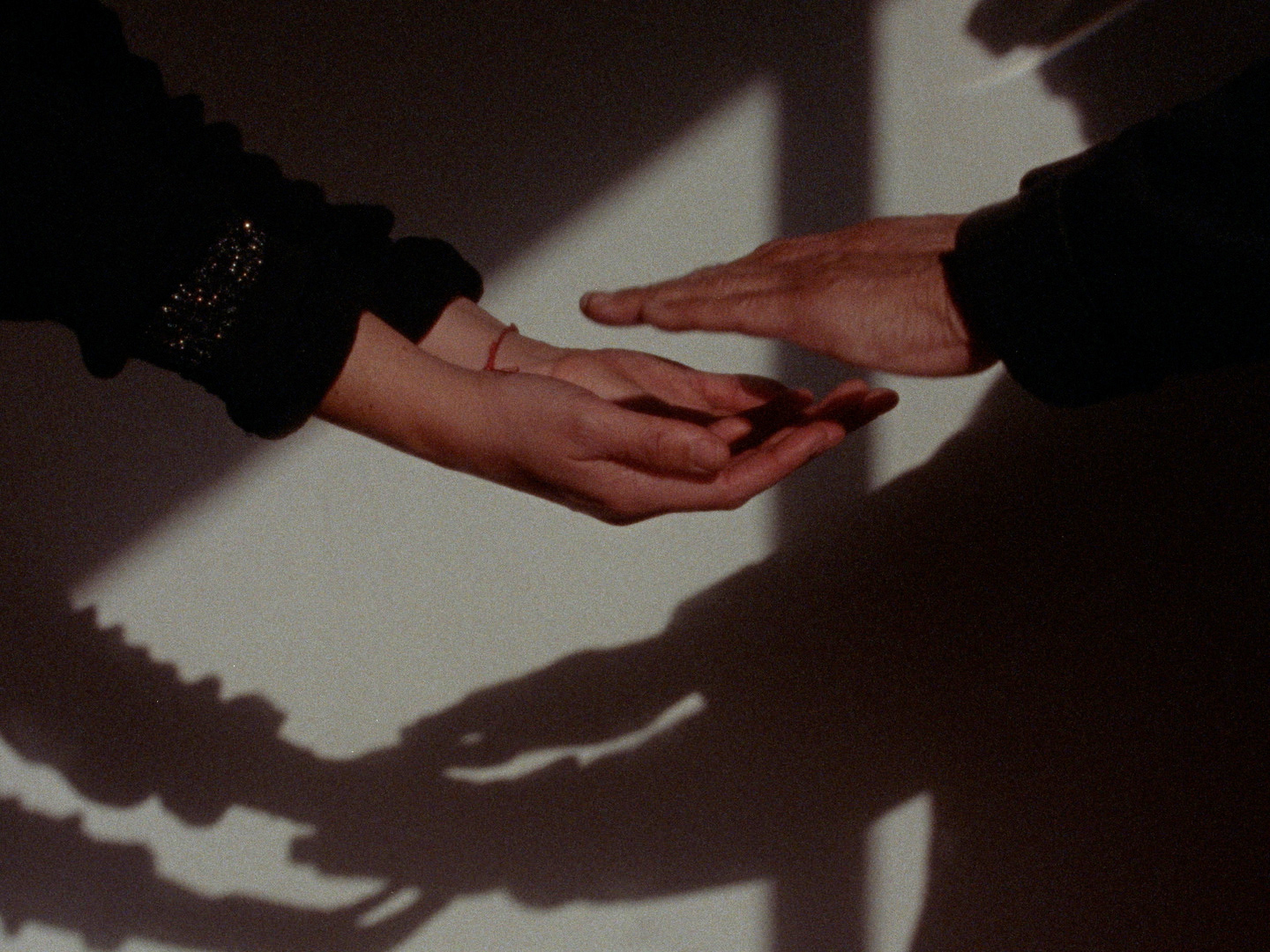
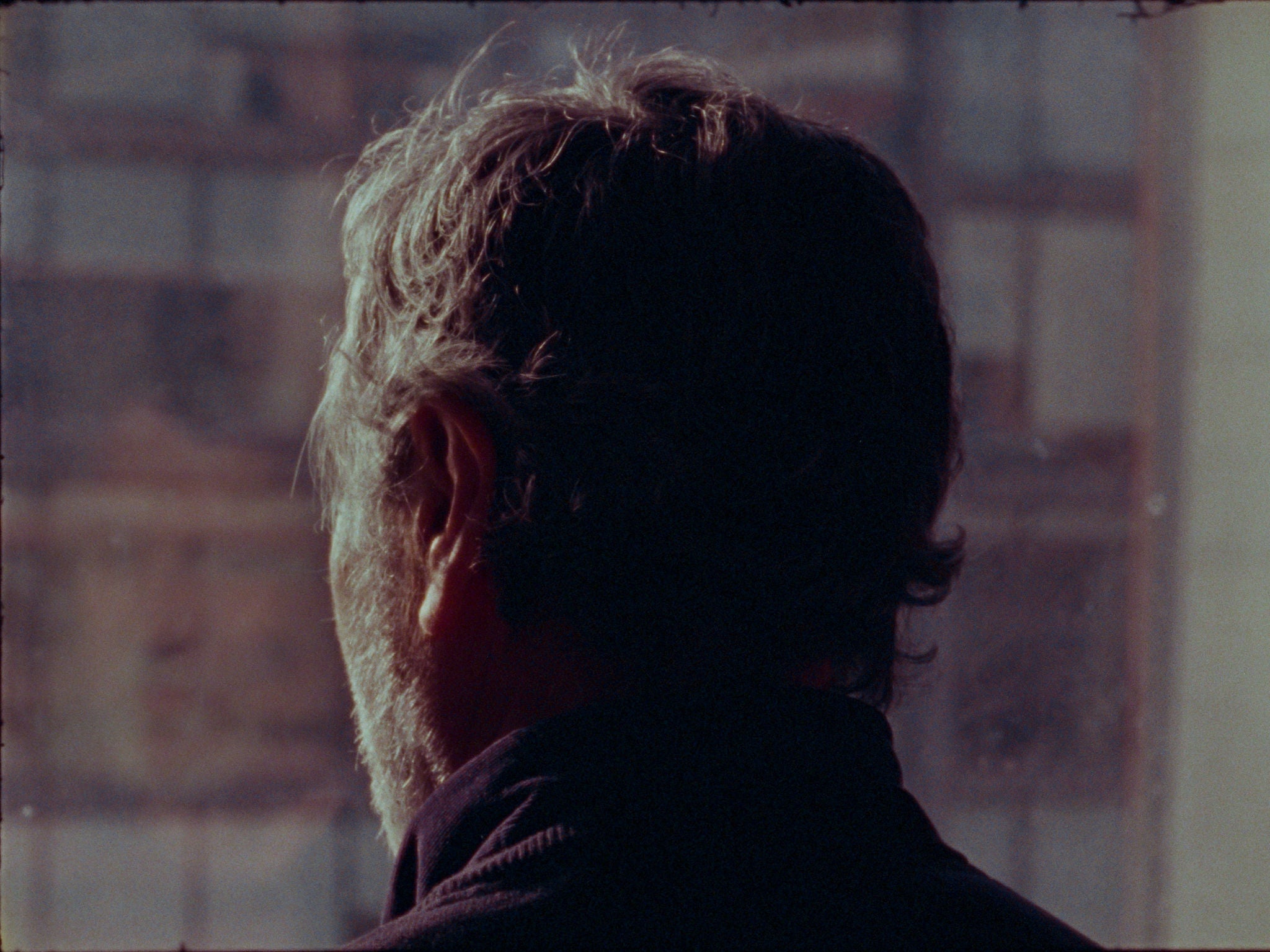
In Una sombra oscilante, we rarely see Lucho’s face. What we do see, however, are his hands—very often. The same hands that pressed the shutter countless times, even despite the risk it involved. But although we seldom see his face, we often hear his voice, talking with his daughter, who is trying to reconstruct a story riddled with gaps, taboos, black holes. At times, Lucho seems to hide behind his words, evasive, avoiding certain topics. At other moments, however, he opens up, sensing that perhaps this is one of the ways wounds might begin to heal. “We weren’t made to win, but you only realize that afterwards,” he tells his daughter. They didn’t win, but they fought. Maybe not all the way to victory, but at least to the end. The dictatorship ended in 1990, but the residue of fear still lingers, like the effects of a nightmare that refuses to fade from memory. In fact, several decades later, there are still people who address Lucho by one of his code names.
What is the political, historical, and symbolic meaning of images? How do we relate to them? How do we interpret them throughout history? Of course, there is in us an intention toward objectivity. Of course, we know it is an unachievable goal. Because interpretation always raises questions, always leaves gaps, always lacks context. That is perhaps why image archives are so powerful: because of all the questions they are capable of generating. Susan Sontag, Roland Barthes, Judith Butler, John Berger, Walter Benjamin... many thinkers have reflected on photography and its intrinsic relationship with memory, and many are the pages they have written on the subject. In her debut feature, the photographer—and now filmmaker—Celeste Rojas clings to the punctum of several photographs and, from there, lets the story unfold. Or at least one of the possible stories.
In Una sombra oscilante, the conversation between Lucho and Celeste is fragmented, diffuse, sinuous. At times, even playful. Because playfulness does not have to be at odds with what is important, with what is transcendental. Think of children, who take their games completely seriously. Like Lucho and Celeste, who at times play and at times show us fragments of a story that can never be fully pieced back together. Enjoying at the same time that process, part magical, part alchemical, that is the analog development of photographs. Watching how the images appear, little by little; becoming aware that, in a certain way, their appearance also brings to light small fragments of Chile’s history.
Activities outside Santa Mònica
Una sombra oscilante
How can we make films in which artistic commitment takes precedence? Col·lectiu 1080 presents a session for reflection and dialogue around this question, accompanied by the screening of a film that explores the intimate and political weight of images, opening up a space to consider them as acts of resistance.
Zumzeig
Carrer Béjar, 53. Barcelona
Metro: Sants (L5), Tarragona (L3), Hostafrancs (L1)
SUNDAY 15.06.25 AT 7PM