


What are you looking for?
You might be looking for...

We conclude the Mòniques 25–26 processes: prototype tasting, tests, and methodologies
Once again the course comes to an end and, with it, the research process of Les Mòniques 25–26. After an intense year, and as we close the prototypes that emerged along the way, we share a tasting of some of the things that happened during the year: research moments, tests, labs, gatherings and methodologies that have shaped the project:
Communication Guild
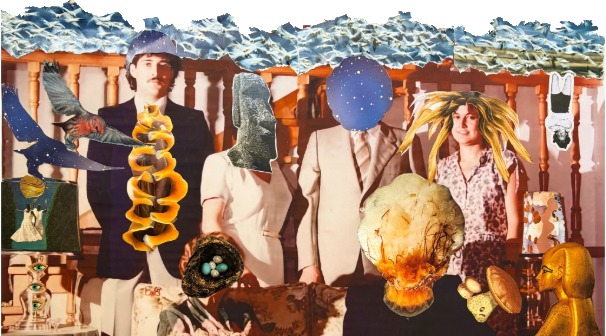
This year, from the communication guild, we worked collectively on developing the prototype The Garden of Memory, a mediation tool that stems from the conserto jongueiro, a methodology for repairing images designed to hack the collective imagination. It has been a year of questions, trial and error, and above all learning to dialogue with the images that already govern the public gaze.
The starting point was to recognize that hegemonic synthesis institutions —tourist postcards, monuments, icons that simplify the city— operate as visual monocultures. In Barcelona, the postcard remains a repertoire of churches and empty façades; in Rio de Janeiro, the “Christ the Redeemer” erases the favela and Blackness. This year we analyzed how these images operate, what they silence and which fictions they sustain.
Faced with this, our aim was not to destroy them but to repair them. We worked with the dissident archive —Black, trans, Roma bodies, jongo matriarchs, fugitive flamencos, the festa— to show that these presences are not anomalies but living structures of the territories we inhabit. By cutting out and inserting these bodies into official postcards, we found the palette fits: the real city storms the postcard, and it seems the photograph has always been like this.
This process allowed us to open a dialogue between hegemony and dissidence, and to ask who decides what deserves to be remembered and on what terms. The Garden of Memory has grown as a space of self‑liberation, where memory ceases to be a cemetery and becomes a technology of life. We sought ways to dismantle tourism’s extractivist nostalgia without reproducing annihilation, proposing a replicable model of narrative dispute and radical coexistence.
Spaces Guild
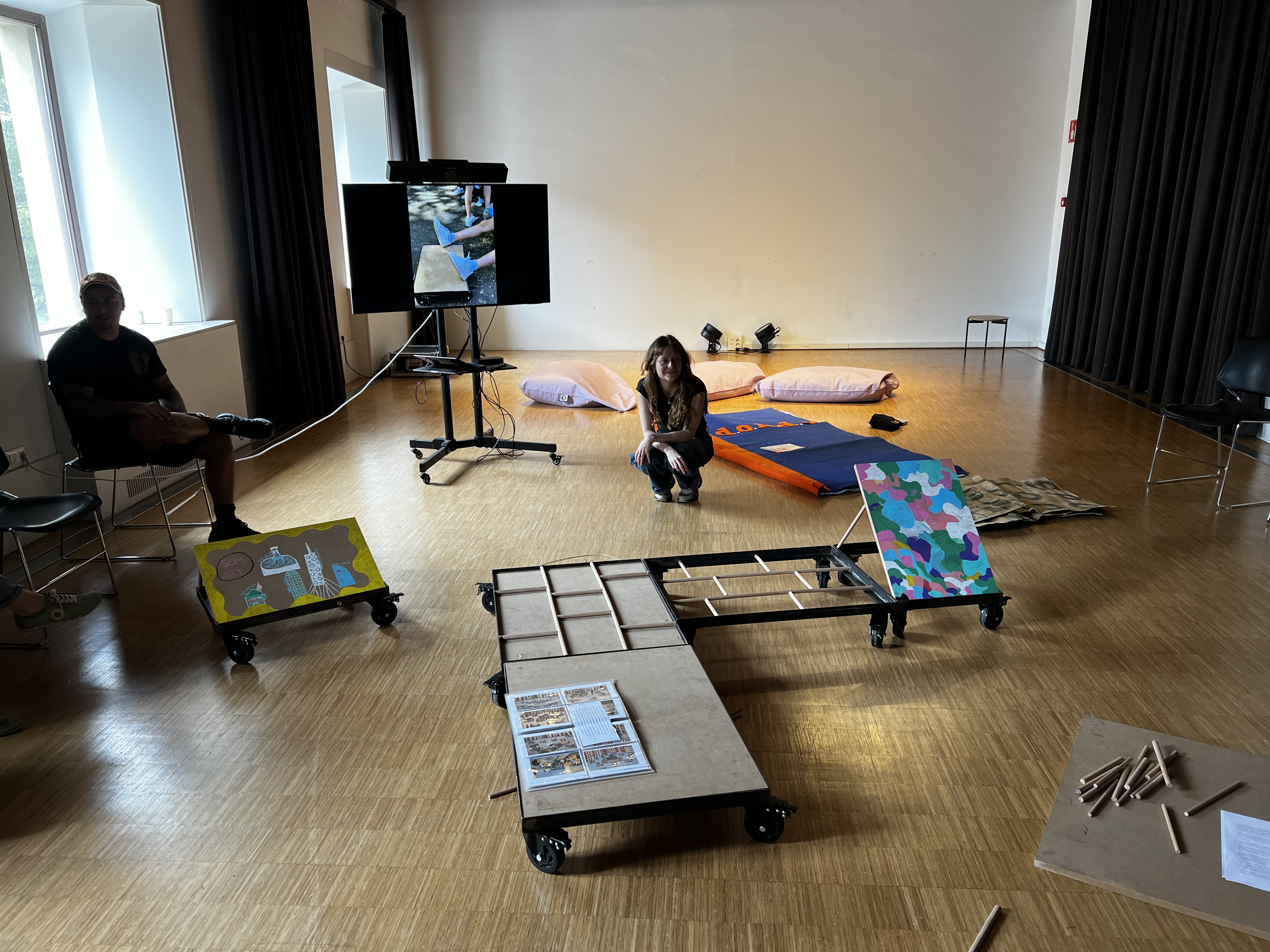
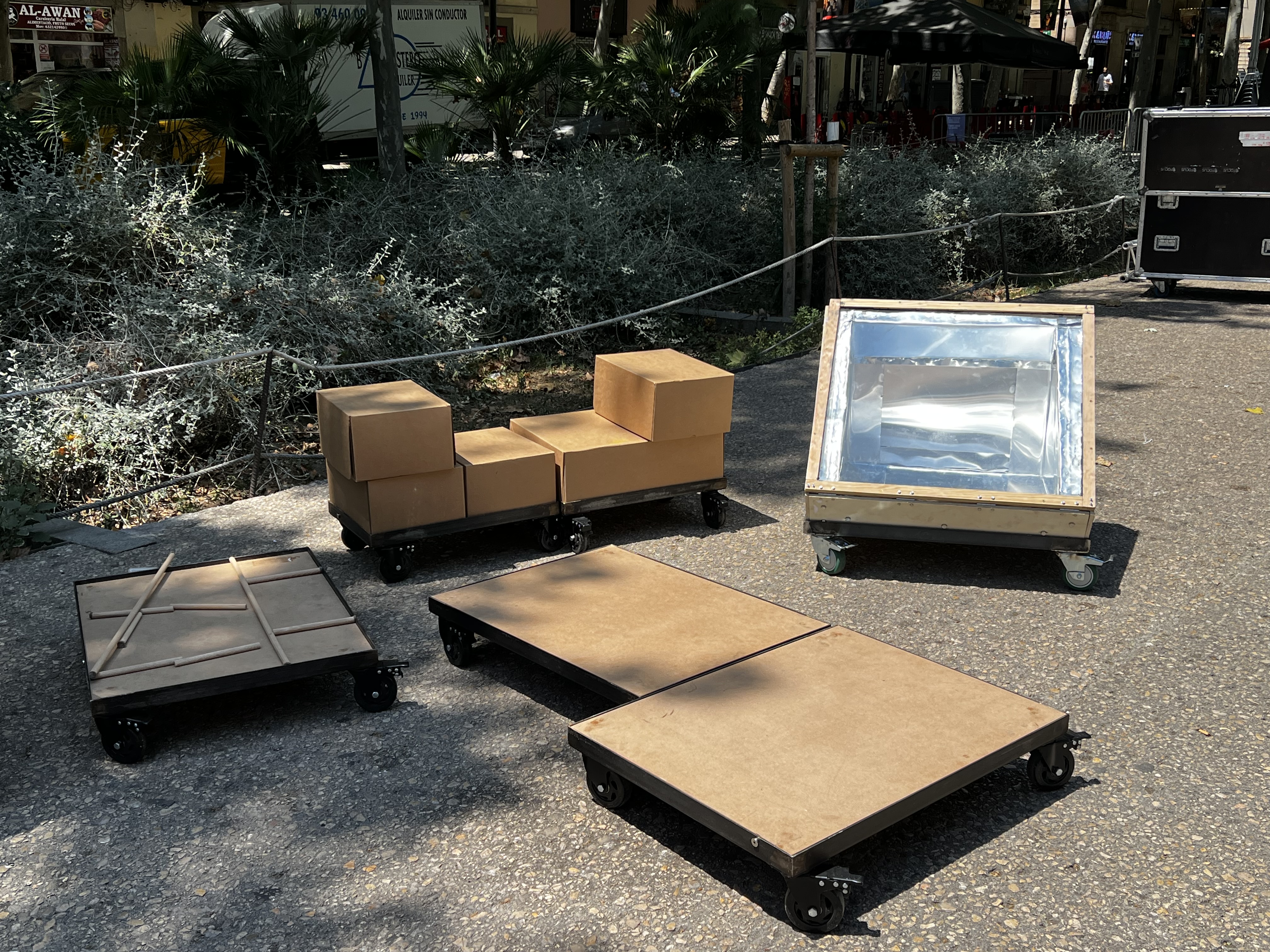
Two moments that best revealed the research were the workshop with Arquiniñxs and the collaboration with the Gastronomy Guild. Rather than presenting the prototype as a finished artifact, we understood it as a deployable ecology of grey furniture, taking as reference the concept of grey literature, which circulates outside conventional publishing circuits while constituting a fundamental form of knowledge production. The term describes architectural fragments that similarly overflow established categories between furniture, architecture and public infrastructure. Its meaning remains deliberately open until activated through collective use. With Arquiniñxs, children unfolded, moved and recomposed these fragments through drawing, play and construction, turning them into situations rather than predetermined functions. Together with the Gastronomy Guild, those same fragments became infrastructure for collective cooking around the solar oven, expanding the prototype into a space of hospitality, care and gathering.
These activations showed that deployability is not only a matter of mobility or modularity, but of keeping the space open to continuous negotiation. Instead of adapting people to a fixed design, the prototype adapted to the imaginaries, relationships and ways of inhabiting that emerged around it. In this sense, it functions less as an object and more as a spatial score: an unfinished frame through which different bodies, practices and forms of care continuously compose new ways of inhabiting space.
Education Guild
From the education guild 2025–26 we have worked around the intersections between art and education, investigating the relationship between methodologies derived from somatic theories, observing what relates to the pedagogical unconscious.
As a result of this process, we prototyped the device “La escuelita de los saberes nómadas”.
[L E S N] is a “living archive”; it contains NOTEBOOKS and CARDS that collect the activations of the Education Guild’s research process for Les Mòniques 2025–26.
[L E S N] is designed to travel and conceived as a resource to share processes, questions and experiences, with the intention of dialoguing, contaminating and inspiring educational‑artistic practices. It is conceived as an open nomadic device and aims to be a tool for exploring non‑hegemonic knowledges through three (3) pedagogical territories: the transgenerational, the interspecies and the pedagogical unconscious.
The three territories work together. They are a dialogue between generations, with ancestors, with the species with which we share the territories we inhabit, and with our own tissues and bodily territories.
Can we build together “La escuelita de los saberes nómadas”?
[L E S N] includes a RECIPE BOOK to encourage dialogue with institutions, entities and collectives, and to motivate them to co‑create didactic methodologies that enable a more creative and critical approach to education.
The dream of [L E S N] is to gather experiences and thus feel —in the present— that we are building the memories of a future generation of human beings who can live with and in diversity.
Digitization Guild
In the last month we have refined the first functionalities of the prototype so that it becomes a self‑sufficient, sustainable social network, outside the logic of large platforms. We are exploring a model without an external server: uploaded images are downloaded directly to each connected device, without storing a persistent feed. This removes dependence on centralized servers and strengthens data sovereignty. Currently, we have a Raspberry Pi that will act as a local server.
At the same time, we are creatively exploring the implementation of an analog scroll via a thermal printer; we opened its code to use it without the default app and to print directly the material uploaded to the digital Kiosk.
We collect the conclusions of the first collective prototyping lab: dynamics around content, connections, uses, filtering, ownership and user profiles, as well as collective terms and conditions of use to advance development. The code is public under a Creative Commons 3.0 license to ensure transparency and replicability.
Soon these prototypes and the others developed during the course will be available to consult in recipe format on the Santa Mònica website.