

What are you looking for?
You might be looking for...

/ˈrej.nə/
Comunicació primitiva, rústica i gutural entre pastors i bestiar
Activity open to all and free of charge, limited to 55 people
Language: Catalan
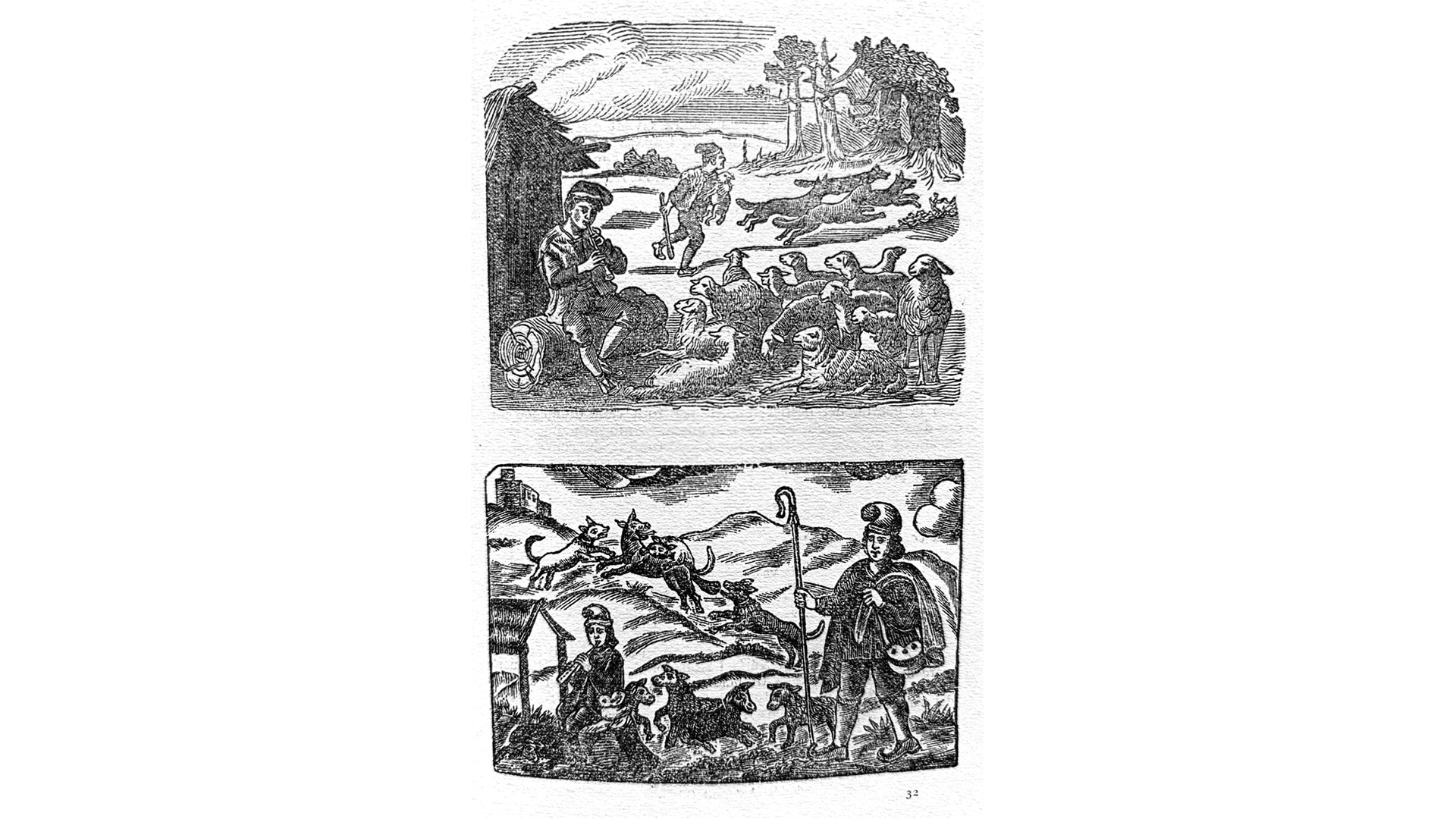
"El vocabulari dels pastors", Joan Amades.
/ˈrej.nə/ is a performative lecture that delves into the languages developed by shepherds to communicate with animals and the land. Drawing on spectrograms of recordings of the voices and calls of present-day shepherds, the session explores the communicative ingenuity of one of humanity’s oldest and most significant ways of life: pastoralism.
The lecture presents the shepherd as the guardian of a cultural, linguistic and sonic heritage closely bound to the processes that led human societies towards sedentary living and permanent settlement. Along the way, every region, climate and community has developed its own ways of relating to livestock, giving rise to vocabularies, phonemes, calls and other forms of communication that belong as much to the language as to the environment that produced them.
Drawing on the material gathered by Joan Amades in El vocabulari dels pastors, the session unpacks the creaks, cries, calls and phonemes of several Catalan shepherds in order to reconnect us with one of the most primordial forms of the spoken word: the imitation of nature and the communicative exchange between nature and its fauna.
Throughout the lecture, Núria del Toll will work on an original Diable carding machine from Grenoble while presenting the session. The wool processed during the event will be offered to the audience at the end.
Activity curated by a cobert
With the participation of Núria del Toll
In collaboration with four catalan farmers & Oriol Estabanell Santiago and Isma Montañez

Núria del Toll (Ripoll, 1991) is neither the daughter of a farmer nor of the land she walks on each day, as Jordi Borràs says of Liên of Prats de Molló. Yet this is where she belongs, and she does what she is meant to do. Trained at the School of Arts and Crafts in Vic, she developed a fascination with experimental practices. Since 2020, she has lived and worked at El Toll, between Moià and Collsuspina, where she raises chickens, grows cereals and fodder crops, and grazes a flock of sheep that helps keep the undergrowth clear. An activist and tireless worker, her practice emerges from direct contact with nature, life and death.
Thursdays of voice and word 2026 builds on the proposals of creators regularly invited by:
Thursdays of voice and word

Thursdays of voice and word

Thursdays of voice and word
Thursdays of voice and word