

What are you looking for?
You might be looking for...

Spaces Guild 2025-2026
Jonah Kawri Ramírez Sturzenegger, Mana Pinto Amaya, Maria Zreiq and Rasheed Jalloul
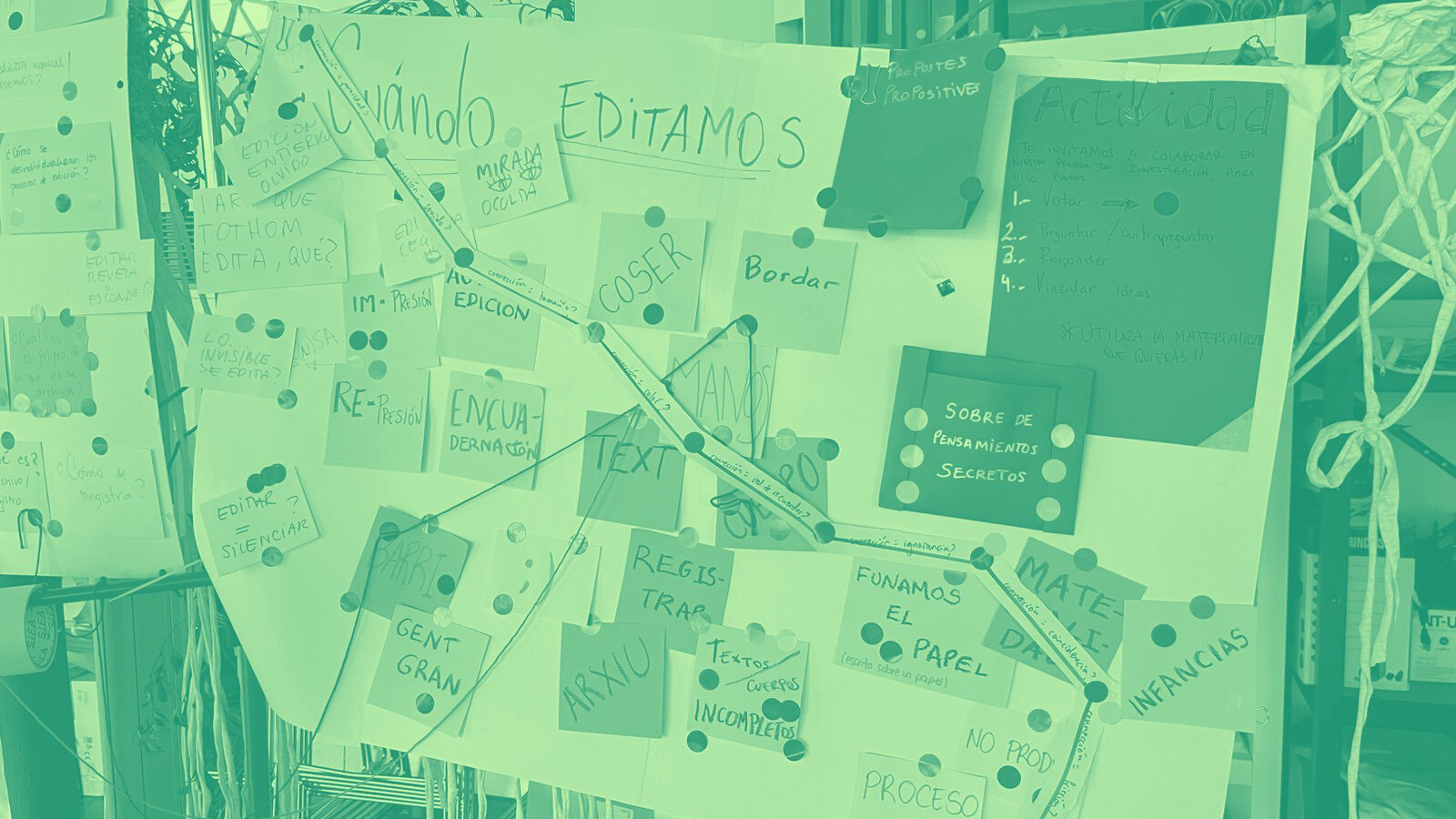
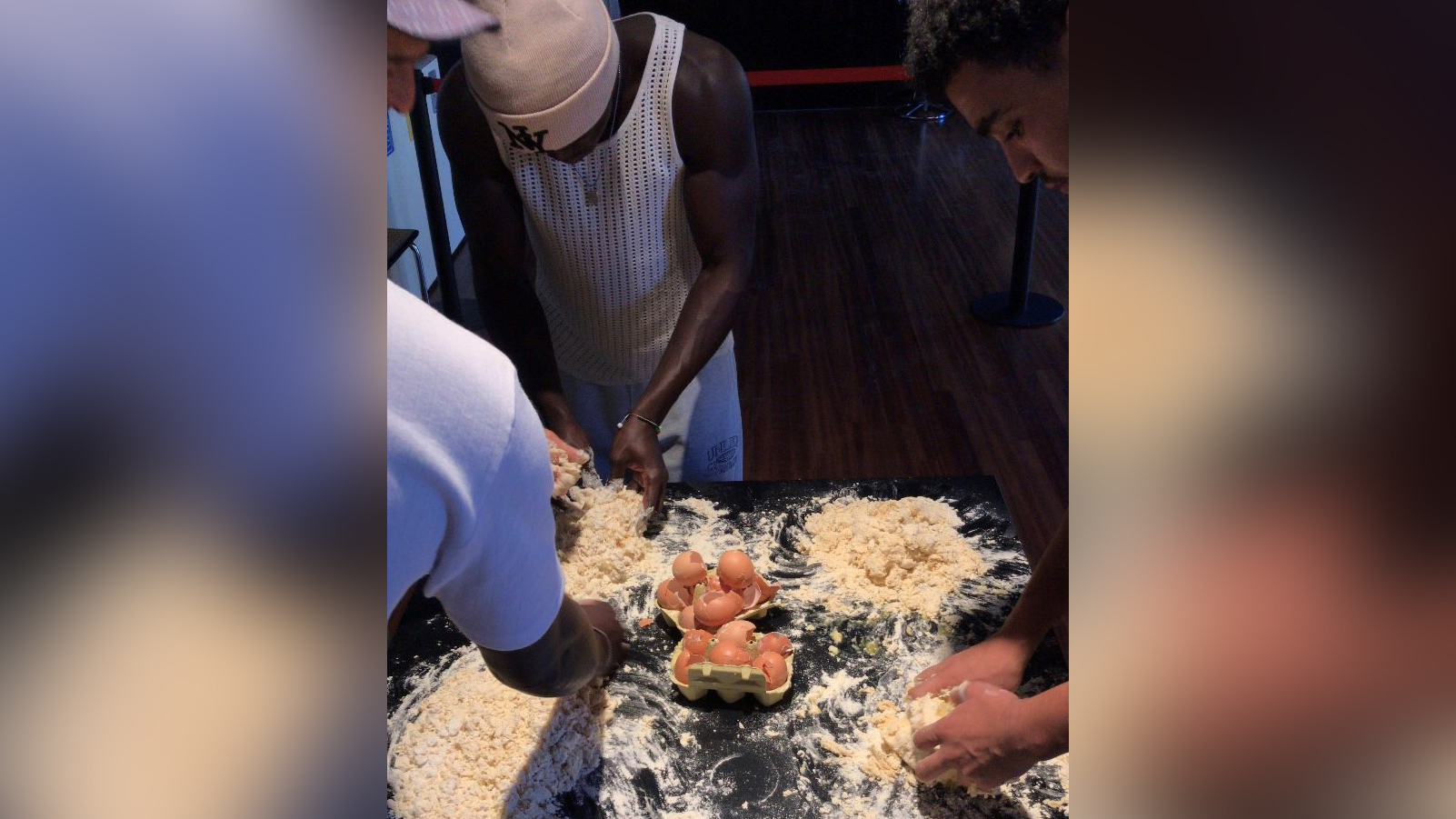
In the Spaces Guild 2025-2026 (Rasheed Jalloul, Mana Pinto, Jonah Kawri Ramírez Sturzenegger and Maria Zreiq), we are interested in approaching the residency from the relaxed production of a device that catalyses situations. How can the common space affect what we make available to people?
We are interested in recovering research like that of the previous cycle, in which we dedicated ourselves to exploring the definitions of the institutional space, with the aim of affecting that space through events related to enjoyment and collectivity. We are reviving ideas previously explored by the Guild: What are the institution's rules? How can established space influence and establish our collective behaviour, our bodies, and our thoughts? We wish to bring these questions to the urban plane as an instituted space, understanding public space as a territory that is both institutional and urban, traversed by visible and invisible norms.
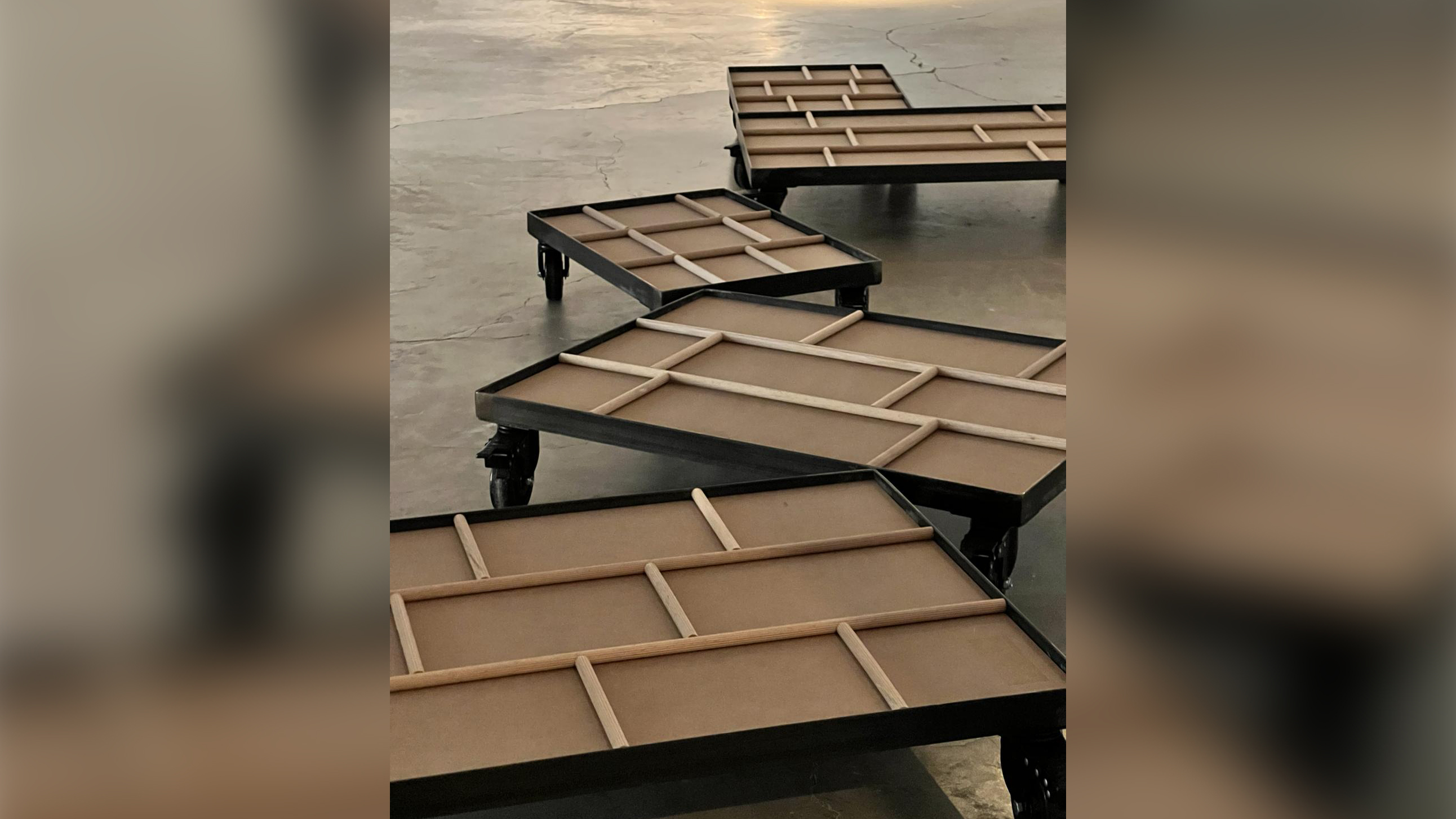
This year, our research has focused on exploring the acupuncture of space, specifically the institutional space called public space. We are also interested in exploring the limits of domesticity and impermanence within that space, asking ourselves how certain domestic gestures can break into the public sphere and how the ephemeral can temporarily reconfigure the established order, activating a common ground that connects the institutional and the urban. As a group, we have dedicated ourselves to designing and thinking internally about what we need or what we want to see in public space in order to project a type of mobile scenery that facilitates the generation of a common space in the public sphere. This process has been sustained through inter-guild collaborations that have given rise to dynamics of collective reconfiguration.
Rasheed, Mana, Maria and Jonah
Biographies:
Jonah Kawri Ramírez Sturzenegger is an artist, researcher and curator. Through disciplines that combine performance with make-up, audiovisual narrative, installation and manual work, he questions human behaviour, our interrelationship with other living beings and the environment, and our perception of history and reality through an anticolonial and queer/kuir/lgbtq+ perspective.
Mana Pinto (Panama, 1995) is a Panamanian curator with a degree in Psychology and Visual Arts from Fordham University, with certifications in cultural mediation from the Universidad Complutense de Madrid and in community curating from the Centro Cultural de España en Nicaragua. Her work articulates exhibitions in non-conventional spaces, focusing on cultural practice as relational work, developing programming through collaborative and interdisciplinary approaches. She currently lives in Barcelona, where she has recently received the curatorial grant from Sala d’Art Jove and the artistic mediation grant from Centre d’Arts Santa Mònica.
Rasheed Jalloul is a Lebanese architect, musician, poet and researcher based in Barcelona, whose transdisciplinary practice is situated at the intersection of space, sound and language. His work explores how these dimensions shape perception, memory and ways of inhabiting. From a decolonial perspective, he researches post-war and diasporic contexts, understanding absence as an active condition that gives rise to new forms of spatial and collective organisation. Through performance, composition, writing and artistic research, he articulates processes that question notions of identity, property and belonging, in dialogue with Arabfuturism and forms of escape. His work has been presented in institutions such as MACBA, Centre d’Art Santa Mònica, Festival Sâlmon, Fundació Enric Miralles, RCR Arquitectes and Kampnagel, among others.
Maria Zreiq is a Palestinian community organizer, educator, and multidisciplinary artist, born and raised in Palestine. Her artistic practice moves through photography, poetry, and documentary cinema, exploring themes of home, body, memory and longing through a decolonial and queer lens. As a community organizer and educator, Maria’s practice is rooted in liberatory pedagogy, decolonial cultural production and the cultivation of queer imagination. She holds dual Bachelor’s degrees in Fine Arts and Philosophy, and a Master’s degree in Documentary Cinema. In her practices, she draws inspiration from abolitionist, Marxist and Black feminist thought.