

What are you looking for?
You might be looking for...

Otros Sures 2026
Quinny Martínez Hernández - Plataforma Cero, Herney Mosquera Garcés - Asociación MigrESS, Hilda Virginia Pérez Rodríguez, Elizabeth Montero Santa, Paula Durán Monfort - Sabers Migrants, Juliana Otálvaro Lasprilla, Luiza Farhat, Andy Oh!, Karel Mena
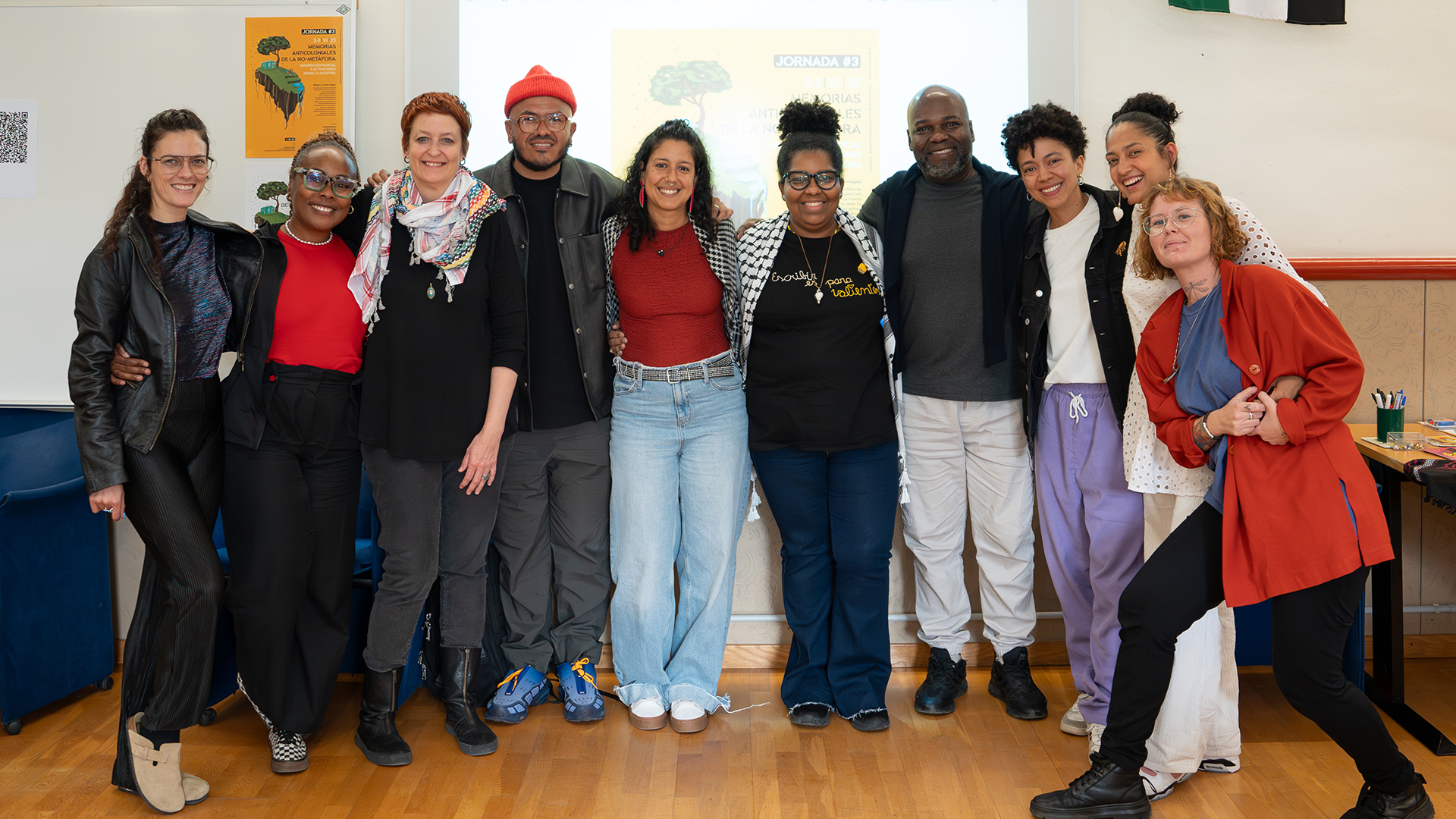
The Otros Sures (Other Souths) research group, or GIOS, emerges as a collective curatorial project driven by Plataforma Cero, Saberes Migrantes and MigrESS, in collaboration with Encara en Acció, which constructs a genealogy of thought and practice that is inscribed in contemporary anti-racist, feminist and counter-colonial struggles.
Their identity is built from the situated experience of racialised and allied cultural managers, researchers, writers, poets, editors, teachers, popular educators and multidisciplinary artists who understand research as a living, affective and political practice. More than a homogeneous collective, Otros Sures is a meeting place where diasporic trajectories, community knowledge and memories of displacement shape a radical imagination aimed at challenging the epistemological frameworks inherited from colonialism.
The genealogy of GIOS draws on historical practices of cultural resistance on the margins, popular pedagogies, migrant support networks, and the tradition of counter-colonial narratives that have sought to rewrite history from the perspective of those who have been systematically silenced. In this sense, Otros Sures positions itself as a space of continuity and breaking away: continuity with the struggles for epistemic justice but breaking away from the extractivist logics of cultural production.
The GIOS investigates the ways in which art, curating, and cultural production can operate as tools of political resistance and social transformation. Its focus is on the decolonisation of knowledge, the visibility of racialised migrant knowledge, and the creation of narratives that challenge Western hegemonic centrality.
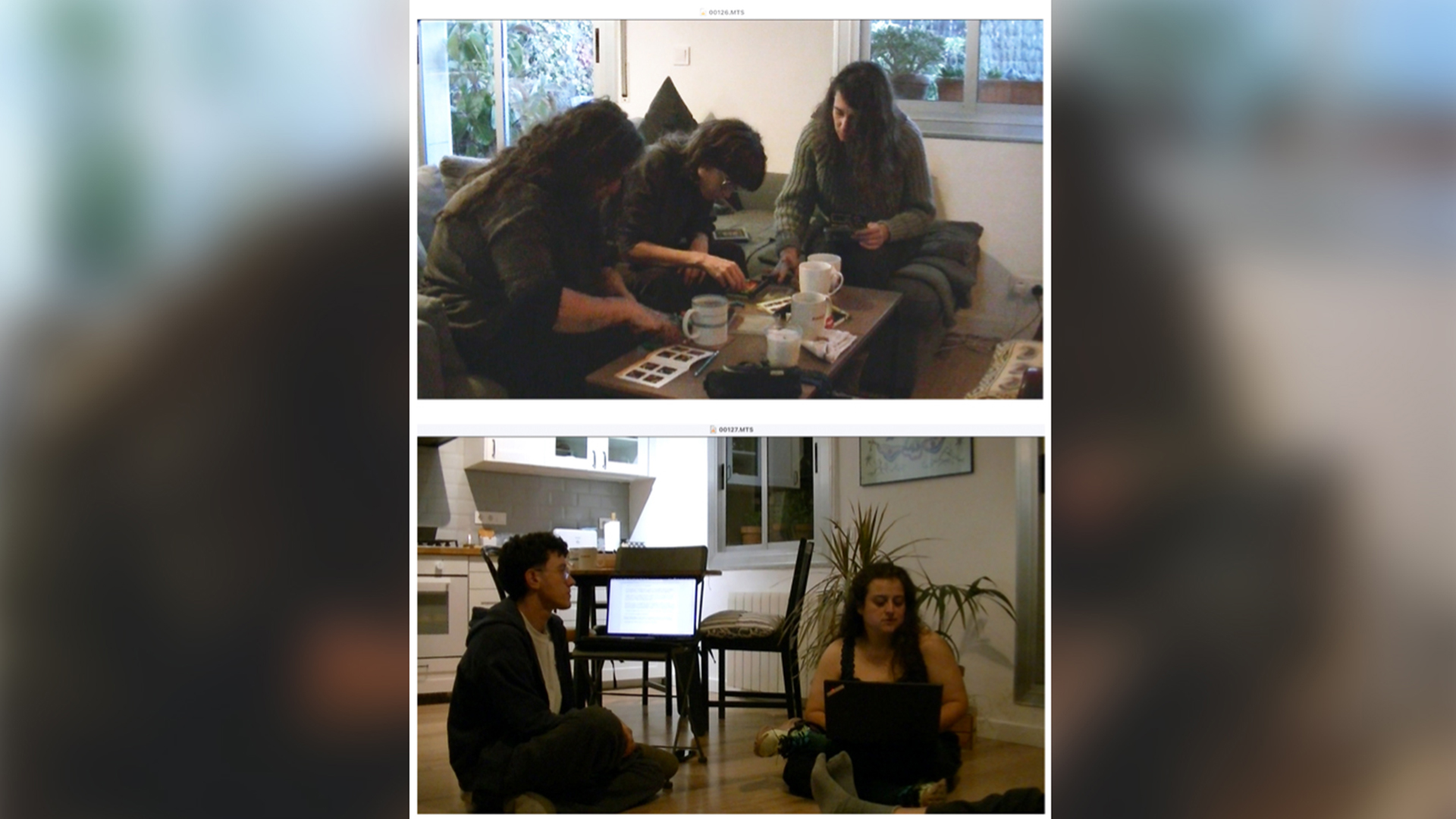
The methodology is collective, situated, and interdisciplinary. It is structured through days of dialogic reflection, conversational spaces, exhibitions, creation laboratories and collaborative curatorial processes that privilege lived experience as a legitimate source of knowledge and radical imagination. This methodological practice is based on listening, affective exchange, and co-creation as forms of research that reject neutrality and recognise the involvement of the body, memory, and territory.
Research is understood as a relational process in which intersubjective dialogue and artistic creation generate knowledge that not only describes reality, but also transforms it.
The main objectives include:
Decolonising cultural and institutional practices through the production of counter-colonial narratives and the making visible of previously invisible knowledge.
Consolidating art and curating as spaces of political resistance and radical imagination capable of proposing alternative futures.
Generating collaborative networks among racialised migrant communities, cultural agents, and institutions to promote processes of epistemic, poetic, and restorative justice.
Promoting interculturality as a recognition of the pluriverses that emerge from diasporas, the territories of the South and their symbolic insularities.
Developing a specialised documentary resource for consultation, consisting of the creation of a manual of radical imagination oriented towards cultural management, which systematises conceptual frameworks, applied methodologies and operational tools for the design, implementation and sustainability of cultural initiatives.
The members of GIOS are situated at the intersection of writing, research, cultural practice and cultural management to develop a trajectory marked by the racialised migrant experience and the commitment to anti-racist and feminist struggles. Their work encompasses poetry, critical curating, and cultural pedagogy as forms of political intervention and explores language as a space of memory, resistance, and reparation.
Their artistic and essayistic production is characterised by the exploration of diasporic identity, the denunciation of structural violence, and the vindication of one's own voice as a tool for collective transformation.
Each participant's connection to GIOS stems from the need to inhabit spaces where the migrant experience is not an object of study, but a subject that produces knowledge. Research thus becomes an extension of one's own life and political trajectory, a place from which to organise memory, community and creation as strategies of resistance.
Participating in this group means contributing to a radical imagination that challenges the boundaries of dominant thought, to the construction of narratives that dispute the colonial narrative, and to the consolidation of art and curating as practices that not only represent reality, but also reconfigure it from the margins.
Contributors:
Quinny Martínez Hernández - Plataforma Cero
Herney Mosquera Garcés - Asociación MigrESS
Hilda Virginia Pérez Rodríguez
Elizabeth Montero Santa
Paula Durán Monfort - Saberes Migrantes
Juliana Otálvaro Lasprilla
Luiza Farhat
Andy Oh!
Karel Mena
Participating organisations:
Plataforma Cero
MigrESS
Saberes Migrantes
Encara en Acció
Biographies:
Quinny Martínez Hernández is a journalist with a diploma in Culture, Community Media, Public Opinion and Citizen Participation and an anti-racist feminist poet. She is also co-creator of GIOS, where she develops interdisciplinary research projects, critical curatorship and collective creation laboratories focused on making racialised migrant communities visible and on the decolonisation of knowledge. She leads initiatives such as the Plataforma Cero publishing project, the Hologramas travelling writing workshop, the Mujeres del Maíz decolonial writing laboratory, and the Itinerant Migrant Book Fair (FILMIG), bringing together literary practice, pedagogy, and cultural self-management as strategies of resistance and social transformation. She is the author of the poetry collections Umami, un corazón erotizado (2020), Las prostitutas de mi imaginario (2022), Salero de entrepierna (2023) and Todo se andará (2024). Her work focuses on migrant memory, racialised corporeality, and the affective politics of desire, incorporating Caribbean epistemologies and counter-colonial narratives as tools for analysis and production of situated knowledge. She has participated in academic and community spaces, presenting papers, workshops and exhibitions that combine art, research and critical pedagogy, and strengthening self-management methodologies and collaborative cultural practices from anti-racist and trans-inclusive perspectives.
Herney Mosquera Garcés is a Colombian popular educator with advanced studies from the Universidad del Valle and studies in Advertising Drawing from the Escuela de Dibujo Especializado de Cali. He has extensive experience with NGOs in the implementation, coordination and monitoring of psychosocial intervention programmes and projects. He has supported community processes in vulnerable sectors (mainly in the Aguablanca District, in Cali, his hometown). Currently, he is in charge of the training area of the social and solidarity economy association MigrESS and is rapporteur for the research group Geografía Sospechosa (Suspicious Geography). He is also co-author of the book Pedagogía de la presencia. Educar en la calle (Corporación Juan Bosco, 2023) and author of the poetry collection Manglar nocturno (Plataforma Cero, 2024).
Hilda Virginia Pérez Rodríguez, a Venezuelan migrant, anti-racist, extrañola, poet and decolonial cultural manager, is co-creator of the Otros Sures research group, GIOS, and a bilingual professional with interdisciplinary training in journalism, cooperation, policy and cultural management. She works as a citizen mobilisation and global citizenship education technician. A project manager and designer of comprehensive strategies for participation and transformative communication, she also works to position narratives oriented towards participation and political influence, with an intercultural, intersectional and gender focus. She conceptualises campaigns on gender, migration, human rights, transformative economies, a culture of peace and anti-racism as well as social media and creative storytelling strategies, while fostering alliances and citizen participation among diverse stakeholders. Currently, she is part of the Valencian performance poetry collective Las Sin Rostro, where she organises monthly poetic immersion experiences and meetings with women creators and dissidents residing in terreta, in addition to being the technical coordinator of Plataforma Cero's research group Geografía Sospechosa (Suspicious Geography).
Elizabeth Montero Santa, a Dominican illustrator, currently resides in Barcelona. Known as "La Flor del Tamarindo", she seeks with her work to represent black and racialised women through the experiences imprinted on her Caribbean heritage. Her artistic studies began with a baccalaureate in Arts, followed by studies in graphic design, illustration and, finally, fashion design, with which she discovered her passion for prints, as well as for their creation through artisanal techniques such as carved rubber stamps for later use on fabrics accompanied by various embroideries. She has great respect for handmade items, which is why she constantly combines artisanal and digital techniques. Her illustrations reflect the nature that has surrounded her since childhood: the plants and bugs in the patio of her mother's house (the biggest role model in her life). She is part of Plataforma Cero collective exhibition of Caribbean women, Acervos Caribe. She collaborated with the acclaimed Rebel Girls book series in 2022, as well as with the Brennan Center for Justice on a series of portraits to commemorate Black History Month in the United States, illustrating for magazines such as Time, Yes! Magazine, Penn Gazette, Lion’s Roar, and Revista Negras, among other collaborations for publishing projects. Currently, she handles graphic interpretation for the Geografía Sospechosa research group.
Paula Durán Monfort is a member of Saberes Migrantes and the editorial collective of the Polisemias collection and co-creator of the Otros Sures research group (GIOS). She is part of the Red de Saberes Compartidos and the CREMIS in Montreal. Her background connects social work, anthropology, and history. She is a professor of Epistemology at the University of Barcelona. Her interests are related to knowledge construction processes and epistemic justice, collaborative practices, and critical methodologies.
Juliana Otálvaro Lasprilla is a Colombian anthropologist and political scientist residing in Barcelona. For more than 11 years, she has worked in Colombia and Spain with various communities affected by violence, racism, and systemic exclusion. Her practice combines cultural coordination, feminist peacebuilding, intercultural education, and memory-based methodologies – always from a rights-based, intersectional, and community-centred approach. She coordinates programmes that strengthen the cultural and political agency of non-hegemonic populations through artistic production, pedagogical tools, and local partnerships to create by listening deeply, facilitating responsibly, and supporting sustainable and dignified processes rooted in territorial knowledge.
Luiza Farhat is a performing and multidisciplinary artist. She works with art through performance, dance, theatre and audiovisual arts, as well as sculpture, poetic writing, workshop instruction and project management. She has developed workshops focused on freedom of movement and body narrative, as well as laboratories on the transformative power of art in which, between theory and practice, disciplines such as dance and writing converge. This is a study inspired by the search for new dialogues between the inner and outer worlds, understanding art as a tool for reflection and growth.
Andy Oh! is an artist passionate about exploring the traditional music of the Colombian Caribbean and lets herself be carried away by reggae, dancehall, R&B and even house. She has sung and played in concerts, workshops, training programmes and studio recordings with various bands and is currently involved in several musical projects in Barcelona. Her main disciplines are percussion, singing, composition, and performance art.
Karel Mena holds a degree in Information Sciences from the Universidad Central de Venezuela, specialising in performing arts and literature. She holds a postgraduate degree in Cultural Management and Policies from the University of Barcelona (UB) and a postgraduate degree in Social and Solidarity Economy from Pompeu Fabra University (UPF). She has lived in Barcelona for more than thirty years, where she has developed as a playwright and cultural manager of alternative theatre projects and cultural entities within the field of the social and solidarity economy.
Participating organisations:
Plataforma Cero is an anti-racist, cultural, academic and trans-inclusive publishing project. It functions as a cultural and research management firm that validates the self-management and creation processes of racialised migrant people, accompanying both collective and individual literary projects until their materialisation. Its approach focuses on weaving networks that place otherness at the centre of knowledge construction, recognising and valuing ancestral knowledge and practices. The editorial line is led by Quinny Martínez Hernández, Alejandro Rabelo García and Ada Okenve Obiang, and extends to a team of racialised migrant women.
MigrESS is an association that promotes the active participation of migrants in the social and solidarity economy of Barcelona. Through training, advice and networking, it seeks to empower migrant entrepreneurs, make their initiatives visible and strengthen the local economic fabric. Their work focuses on social inclusion, interculturality and community transformation, and promotes sustainable and democratic practices based on the principles of the social and solidarity economy. MigrESS collaborates with various organisations to raise awareness about the importance of the social and solidarity economy and the role of migrants in strengthening it.
Saberes Migrantes is a travelling meeting space that promotes collaborative processes of thinking, listening and dialogue, with the aim of claiming epistemic justice from collective creation and resistance. In collaboration with Jiser, it promotes Polisemias, an editorial collection that explores alternative forms of knowledge production, connecting feeling, thinking and critical action. The initiative brings together visual arts, poetry, music and other creative formats, and is published in different languages to build plural narratives with their own voice. In 2023, it published 0# Polisemias del silencio and in 2024 it started 1# Polisemias para otros tiempos. The editorial collective is made up of Ida Barbati, Houari Bouchenak, Xavier de Luca, Paula Durán Monfort, Guerthy Gutiérrez, Boris Mercado, Danilo Marinho, Camila Opazo Sepúlveda and Alejandra Rocabado.
Encara en Acció is an LGBTQI+ empowerment space with a comprehensive approach that goes beyond the defence of rights. Their work seeks to empower people in the community in various areas, creating safe spaces where sexual and gender diversity, ecological awareness, and the defence of migrants' rights converge.