

What are you looking for?
You might be looking for...

Irreparables
Hac Vinent, Tián Álvarez, Ana / eMe, T
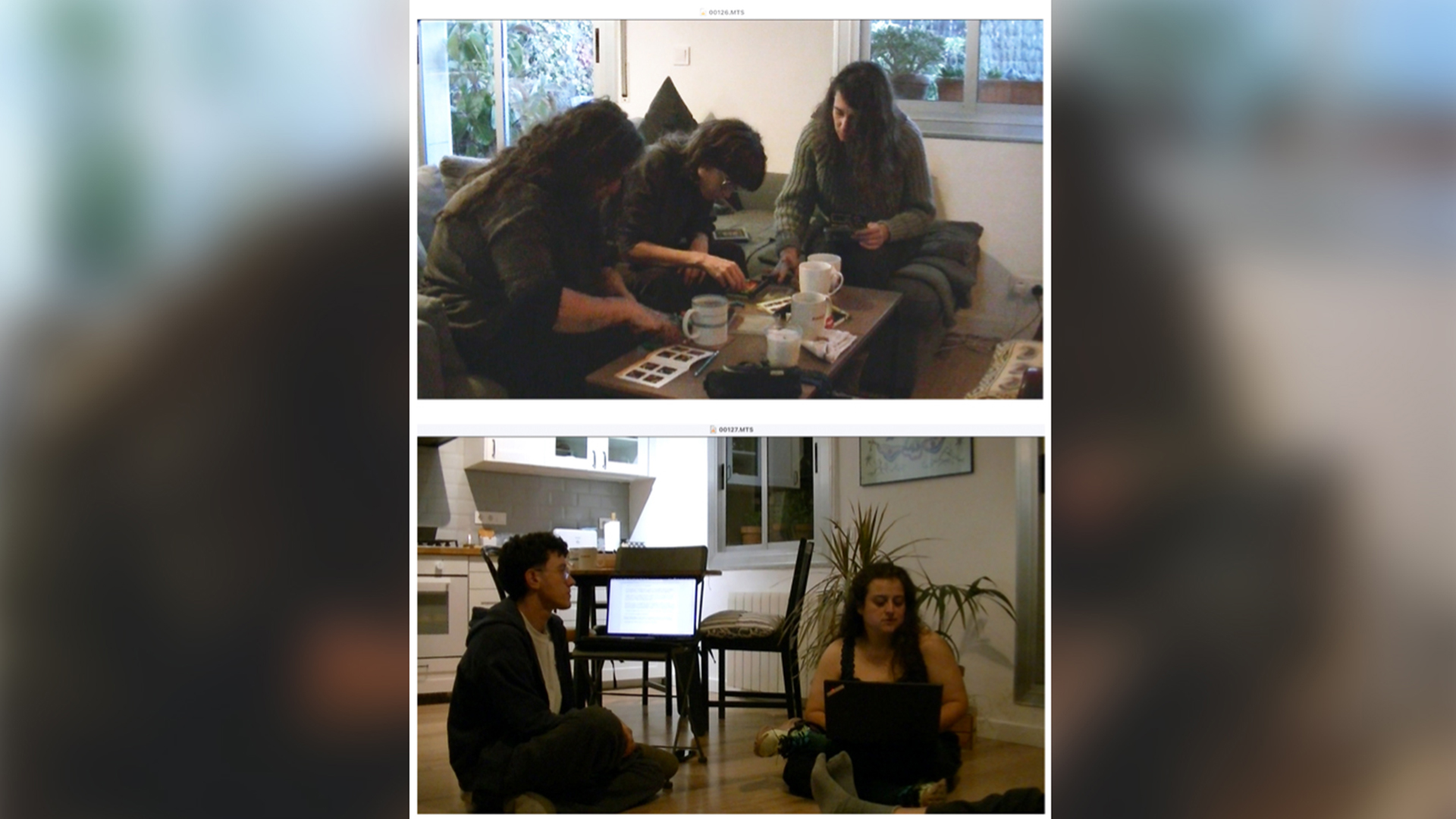
Irreparables investigates the expansion of access in institutional art spaces. The work begins with the following questions: What shapes are left out of the spaces? Who inhabits them and what possibilities exist for inhabiting them? Who creates them? Who leads them? These questions arise from questioning the way we structure ourselves as a society and are specifically applied to artistic institutions.
It's about imagining how to build new possibilities. To break free from the limits imposed by the structures and systems that oppress us, and to investigate how to build beyond them.
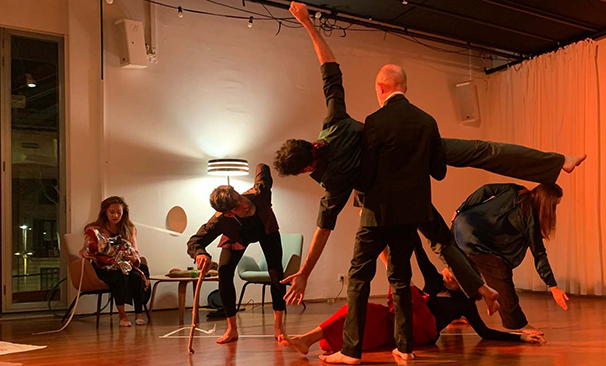
To develop the work, small experiential experiments will be carried out starring the members of the group – all from the disca, trans/trava and aternities* collective – in order to explore how far it is (im)possible to go in the spaces offered by different artistic institutions.
The goal is to move away from the intellectual, academic, and ableist perspectives that usually permeate research processes. We advocate for an exploration situated in the body and in pleasure, in the living and in the embodied experience. This research is more oriented towards being and existing than the mere exercise of thought.
We propose self-knowledge processes through therapeutic-artistic creation. We are betting on this hybridisation to break another false binary: that which separates the artistic from the therapeutic. From a capitalist perspective, art and therapy tend to reproduce the same ableist, hierarchical, and precarious logics, in which work is built on tension and exploitation.
Our goals are for this research space to be a place where we can let go, imagine, and act on other possibilities. A space to explore the creation of new tools and new ways of being. Or to put it more precisely: that there are more forms.
We want to break with the intellectual-academic-colonial perspective that establishes rigid boundaries between what is considered art and what is not, and what is therapeutic and what is not. We are also considering connecting this research with our own practices, outside the context of the group.
We want to investigate the collective self-management of the body, pleasure and health (physical, psychological, emotional, spiritual…) from discas and queer perspectives and how this collective self-management of our bodies can also be done through artistic methodologies.
* We use aternities to refer to the people who accompany minors in their growth and dissent from the gender binary.
Biographies:
Hac Vinent (Barcelona, 1988) develops his work from an anti-ableist and crip-queer perspective, shaped by his experience as a deaf, neurodivergent and queer person. He has held group and solo exhibitions in Spain, Hungary, Germany, the Netherlands, France, Austria, Mexico, Argentina and Colombia. Among the awards received, the following stand out: Sala d’Art Jove, Miquel Casablancas and Generación 2021. He has received numerous research, creation and production grants, such as the Hangar grant, the ICUB Creació i Museus grant, the Generalitat de Catalunya Visual Arts grant, the EMPELT grant, the Barcelona Crea grant and the BBVA Leonardo grant. His work features in the collections of MACBA, Sant Andreu Contemporani, Fundación Montemadrid, Fundació Guasch Coranty and Fundació Güell.
Tián Álvarez's (A Coruña, 1992) work is framed within a practice that crosses the queer, the trans and the neurodivergent as forces capable of reconfiguring collective perspectives and experiences. Taking part in the production of artistic audiovisual projects, fiction and documentary films between Madrid, Barcelona and Los Angeles, Álvarez has received awards from the AdN film festival (Madrid); REC, the International Film Festival of Tarragona; and Acció Dones Visuals (Barcelona). Currently, Álvarez is developing an audiovisual, graphic, sculptural and performative practice that expands ways of perceiving attention, identity and desire.
Ana / eMe's (Asturias, 1990) practice seeks to blur the boundaries between life and work, art and therapy, militancy and rest, adulthood and child-rearing. The aim is to open up artistic, therapeutic, and everyday spaces to give rise to the invisible and generate more complete experiences, through performance, literature, encounters between two people, experiential workshops, and aternity. Trained in humanistic therapies, attention to violence and trauma, the artist accompanies and shares based on personal experience as a survivor of violence and as a neurodivergent.
T (Barcelona, 1985). Individual and group support. A multidisciplinary perspective to give rise to things instead of names. Autistic, non-binary, disabled, suffering, white, fat, lame, arent, etc. Their own artistic practice is based on intervention and the creation of redundant forms in various formats: image, text, movement, sound, touch, etc. The aim is to highlight and take action against systemic violence by facilitating spaces and materials where finding oneself is easier.