


What are you looking for?
You might be looking for...

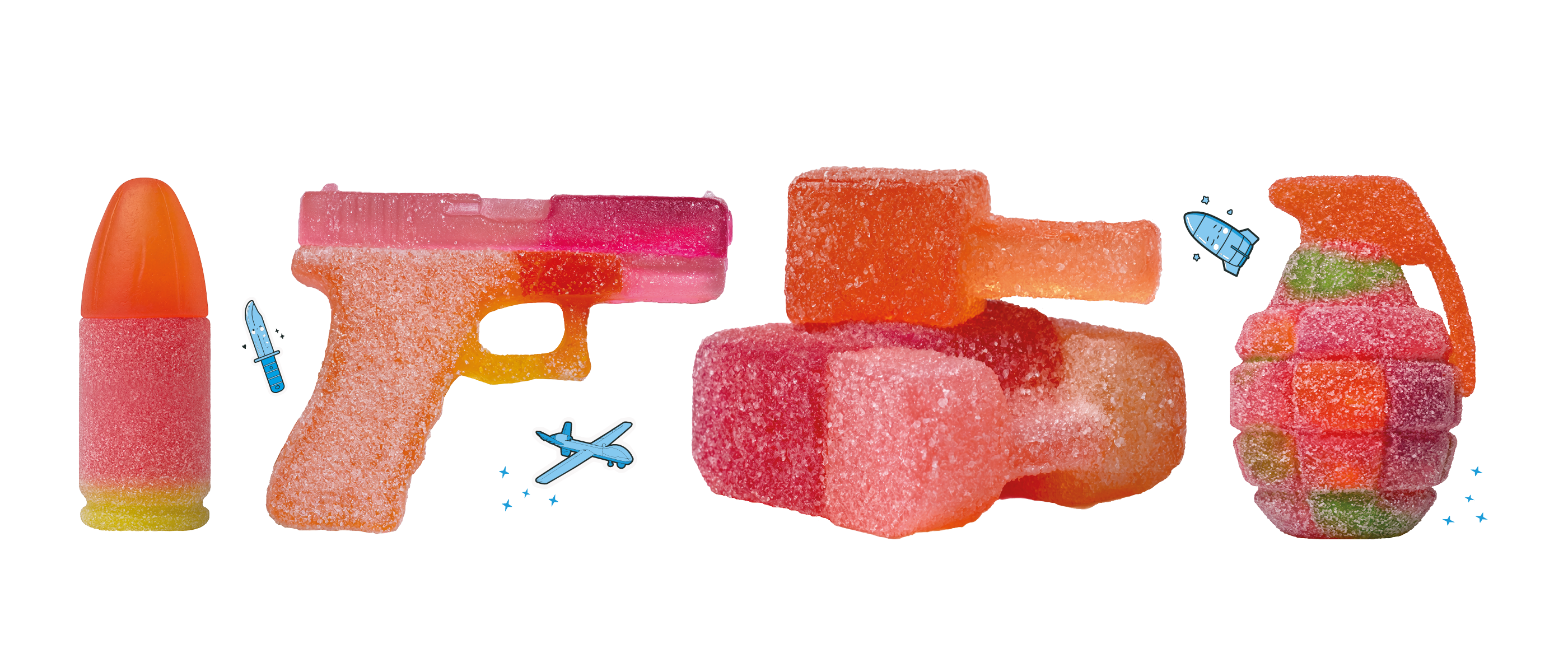
Boom Crash Candy Crush
Exhibition

“My wife likes Candy Crush too, so I just downloaded Gems of War. It’s a free game and she enjoyed it a lot especially when she figured it out”. azakhuza21 • 3y ago – Reddit
The compulsion loop is a common strategy in video game design, employed to instil behavioural patterns that players may feel compelled to repeat. These loops are designed to trigger a series of neurochemical rewards, such as the release of dopamine, the so-called happiness hormone.
Launched in 2012, Candy Crush is one of the most popular gaming apps of all time. With more than 3.6 billion downloads and astronomical revenues, it has not only become an integral part of contemporary transitional spaces, such as subway carriages and waiting rooms, but also actively shapes them. Bodies are disciplined through repetitive patterns of movement: the swiping of fingers, the tilt of the spine, the eyes gazing insistently at the screen. Combined with microdoses of dopamine, these gestures give rise to unwitting collective choreographies that fill all sorts of urban spaces where waiting is the imposed condition.
Far from being incidental, this collective effort has become a remarkably effective field of assimilation for neoliberal and military logics, sharply at odds with the aesthetic of endless cascades of gleaming sweets that Candy Crush proposes. It is precisely within this cognitive dissonance that the extractivist logics of the military-industrial complex are deployed: while millions of users solve sweet-shaped puzzles, major technology corporations (many holding direct contracts with the defence industry) appropriate user data such as location to feed their networks of capital and intelligence. Seen in this light, it is not difficult to understand how the internet has become the world's largest source of military intelligence, through bodies connected to digital devices.
This exhibition interrogates this very fault line: the collision between bodies, the mundane, technology, capital, and the global military-industrial complex. An entanglement in which the erosion of meaning and human agency is also at stake. Ultimately, Boom Crash Candy Crush reflects on what it means to be human in the age of dopamine discipline and digital militarism.
Artists and exhibited work
-
Hito Steyerl - STRIKE

-
Shona Illingworth - ARTIFICIAL SUN. Imploding world at machine speed
-
May Murad - Les nuits d'attente
-
Jessica Ekomane - Dark Patterns
-
Heba Y. Amin - Camoufleur's Dummy No. 1
-
Noura Tafeche - Annihilation Core Inherited Lore
-
!Mediengruppe Bitnik - Flagged for Explicit Image
-
Mar Medina + Roc Jiménez de Cisneros + Joana Moll - Cook-OFF
-
Mario Santamaría - Cloudplexity
-
Aram Bartholl - Map
-
Faith Holland - Detumescence
-
aaajiao - foam wave
-
Conrad Weise + Kjell Wistoff - Movement 504
-
¥€$Si Perse - Cybermedieval Data-Stained Glass
-
César Escudero + Martin Nadal - Total Prediction
-
Sarah Ciston - AI War Cloud Database
-
Asia Bazdyrieva - Mediated (I)
-
Ben Grosser - Go Rando (Logo)
-
laSADCUM - Click Tarola
Credits
Artists: Hito Steyerl, Shona Illingworth, May Murad, Jessica Ekomane, Heba Y. Amin, Noura Tafeche, !Mediengruppe Bitnik, Mar Medina + Roc Jiménez de Cisneros + Joana Moll, Mario Santamaría, Aram Bartholl, Faith Holland, aaajiao, Conrad Weise + Kjell Wistoffm, ¥€$Si Perse, César Escudero + Martin Nadal, Sarah Ciston, Asia Bazdyrieva, Ben Grosser and laSADCUM
Curation: Joana Moll and Enric Puig Punyet
Graphic identity and exhibition design: Todojunto. Ricardo Duque, Leticia Ortín and Tiago Pina
Architectural design: Marina Otero and Andrea Muniáin
Organized by:


With the collaboration of: